
Report by student journalist Syraat Al Mustaqeem
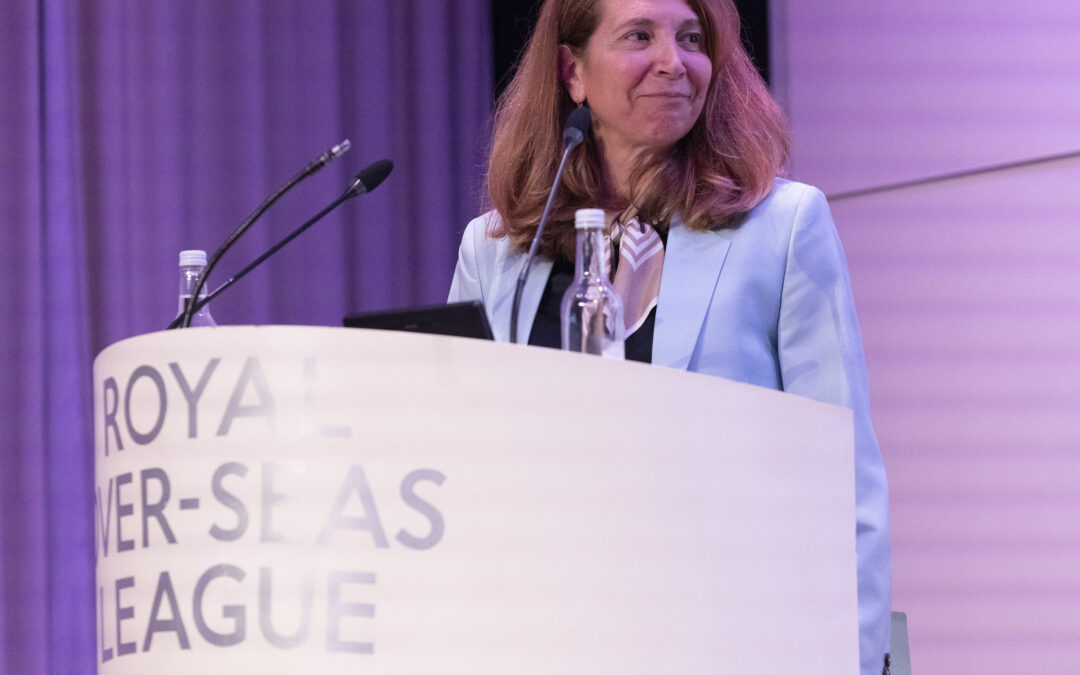
Editor of the Financial Times Roula Khalaf spoke on the threats to investigative journalism that are “ominously close to home” at the 2022 Annual Hugh Cudlipp Lecture.
The former foreign editor spoke about her personal experience as a journalist and editor, targeted by restrictive governments and executives, at the Royal Over-Seas League on St James’s Street.
The annual lecture, named in memory of the late Lord Cudlipp, former editorial director of the Daily Mirror and past President of the London Press Club, is sponsored by the Daily Mirror and Cision UK.
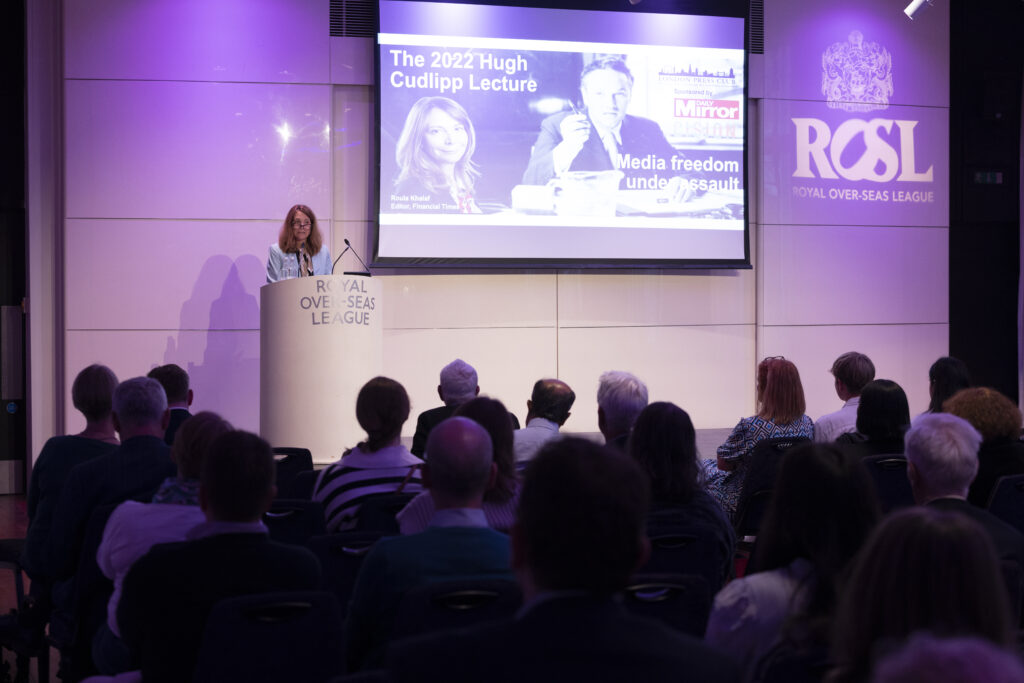
The 2022 Hugh Cudlipp Lecture by Roula Khalaf Editor Financial Times.
Now at the helm of FT, Khalaf said she feels “more fear” at the prospect of protecting her staff, than she did reporting from war-torn countries, notorious for their media censorship.
She said: “Our experience at FT starkly illustrates the enabling nature of our systems to exert pressure on public interest journalism and the threat that is ominously close to home.
“German prosecutors chose to go after our reporters rather than the company. And when I say after, I mean after.
“The German financial watchdog accused FT journalists because of market manipulation over the reports about accounting irregularities. The FT, of course, was right.”
The Munich prosecutor dropped the investigation in to FT after €1.9 billion were registered to be missing from the company accounts.
The editor, who took on her role just six weeks before the first UK lockdown, outlined the prevalence of “legal intimidation” from wealthy corporations, the trend of “slap” lawsuits and even reports of phone tapping journalists, including Khalaf, through the Israeli government’s use of NSO software.
On the issue of private investigators tailing FT journalists, Khalaf joked that “there is going to be a Netflix movie about all of this”.
The solutions lie in reformed public interest defences and reasonable, fixed-rate legal costs to avoid attempts at publication becoming “financially ruinous”, she said.
Khalaf joins a slew of notable speakers who have led this event in previous years, such as George Osborne, James Harding, Emily Bell, David Walsh, Sir Harold Evans, Jon Snow, Rebekah Wade, Alastair Campbell, Paul Dacre, Andrew Marr, Lord Grade, Felicity Green, Piers Morgan and Geoffrey Goodman.
Young investigative journalists were celebrated at the event for their published pieces exposing issues of sexual harassment, pollution and racism.
Advising young journalists on their future in the field, Khalaf said: “You cannot do investigative journalism by yourself. You need the institution – and the lawyers.”
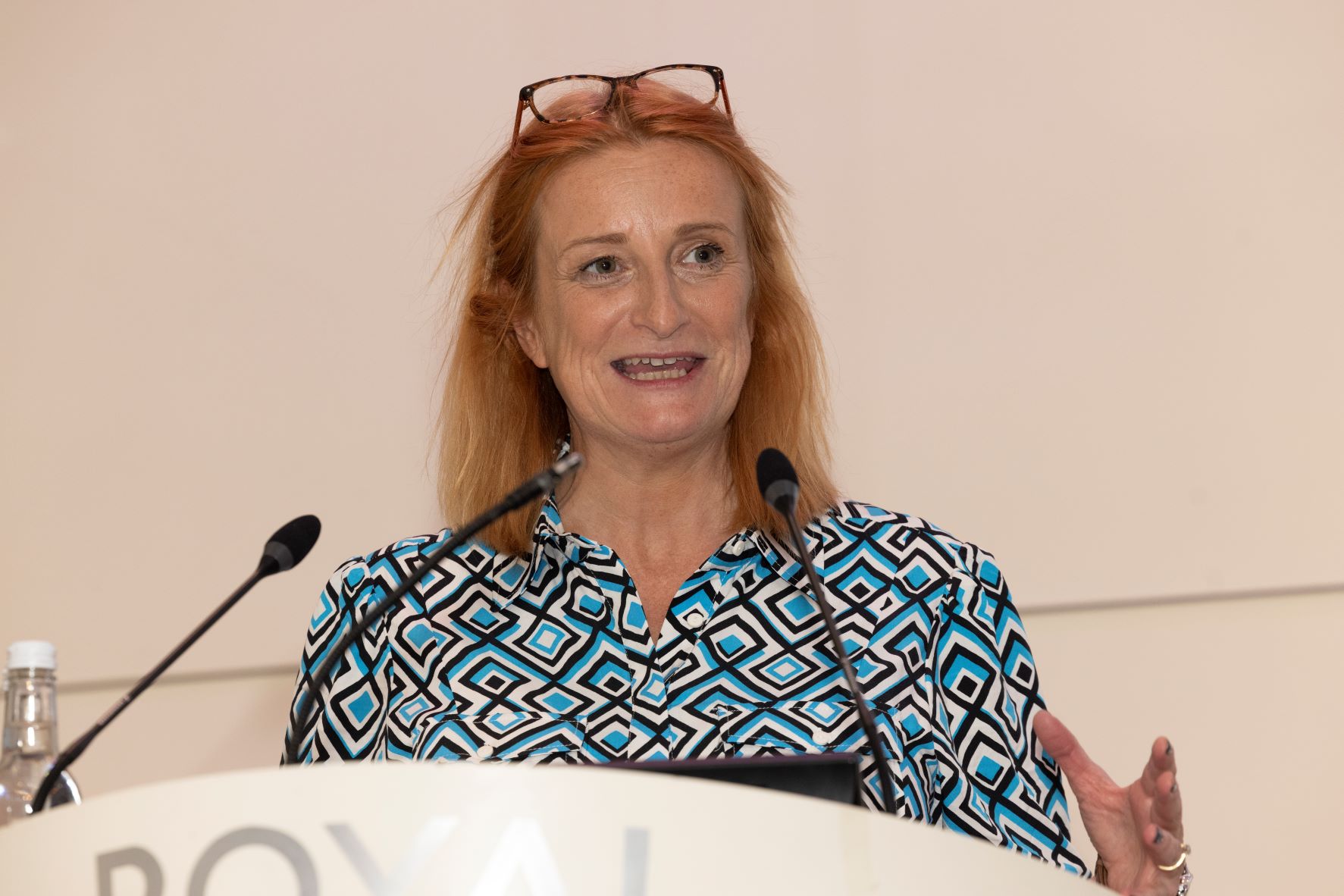
Alison Phillips, editor of the Daily Mirror and chair of the Cudlipp Committee,
At the start of the evening, the editor of the Daily Mirror and chair of the Cudlipp Committee, Alison Phillips, announced the winner of the Cudlipp Student Journalism Awards. She said: “It’s been a tricky couple of years for students and especially those hoping to pursue a career in journalism – so many young journalists make their way into our profession by being in newsrooms on work placements or working closely with other young journalist in Student newsrooms – and for much of the past two years that’s been very hard to do. But you wouldn’t know that to see the quality of some of the entries we received this year.”
Um E Aymen Babar won the Cudlipp Student Award for 2022 and a £1,500 cash prize with her hard hitting commentary on the effects of the Azim Rafiq racism scandal in Wisden’s Quarterly Nightwatchman. The judges said: “A brave, poignant, well-researched and timely piece that asks as many questions as it answers about systemic racism.”
Highly commended writers included Ghazal Abbasi and Geeta Wedderburn for their Evening Standard collaboration on the vile misogyny faced by female politicians.
Others were Alex Fleming-Brown, for his Metro UK piece on administering vaccines, 1000 of which he administered personally; Kimi Chaddah, who wrote on the climate impact of the Silvertown Tunnel on the Newham community of colour for galdem magazine; Billy Stockwell for his article in the Bristol Cable on untreated sewage being dumped into rivers; and Chloe Johnson for her editor’s letter in Conscious Being, a publication for disabled and non-binary people, that provided assurance for these communities over the pandemic.
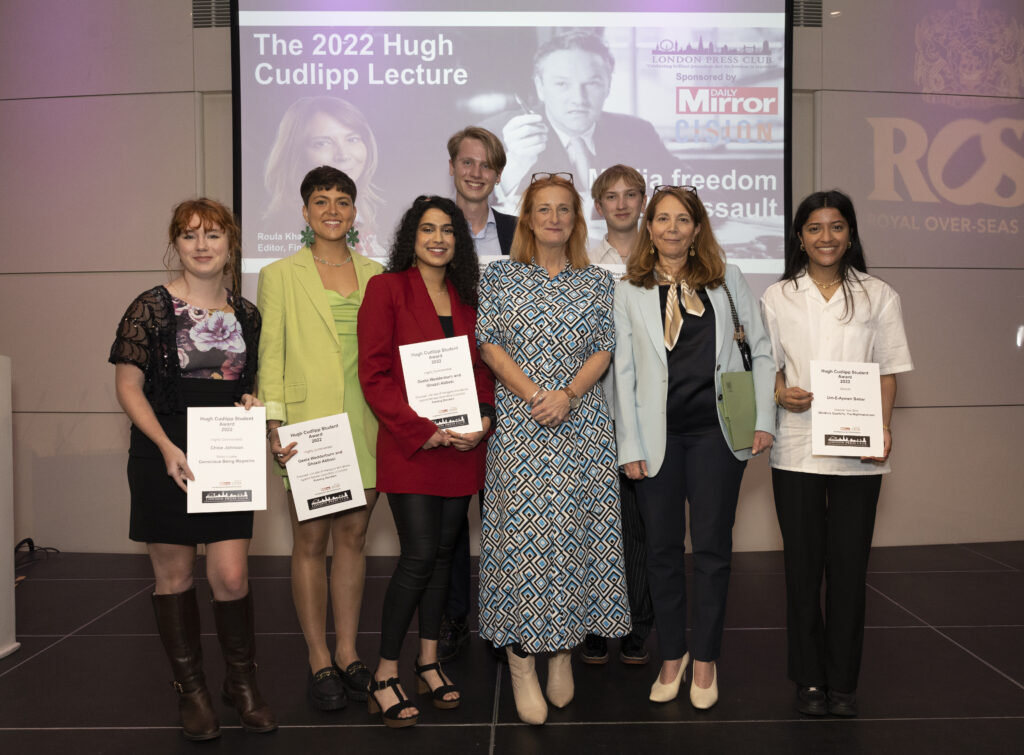
Mirror Editor Alison Phillips Student Award winner Um-E-Ayman Babar (far right) and other highly commended entrants.

