
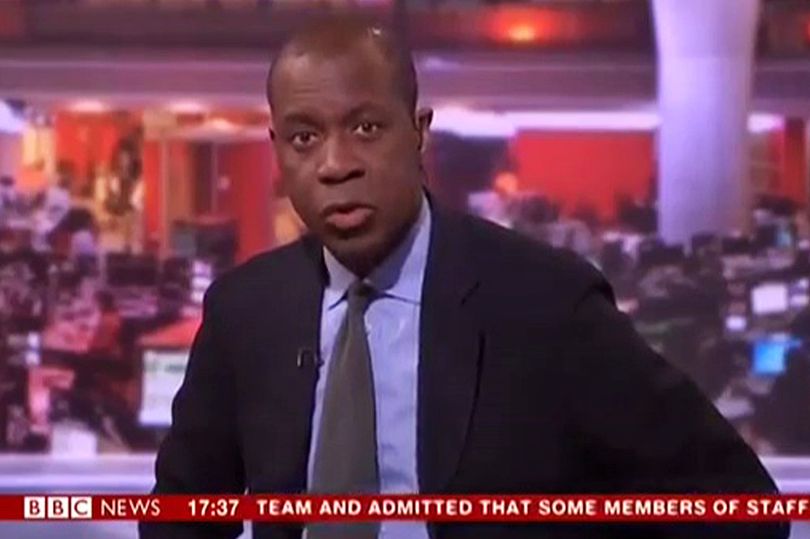
The lecture by Clive Myrie on lessons to beware from the US media landscape has so far been watched on YouTube by more than 2,000. It was held in association with the London Press Club and the Society of Editors in tribute to the life and times of Harold Evans who died last year. Harold Evans’s widow Tina Brown emailed after the screening: “Clive was so terrific. Harry would have been really honoured and thrilled.”
The lecture can be seen at https://youtu.be/VucKN2112eU
Report by Paul Charman
The storming of the Capitol building by an angry mob of Trump supporters was “the logical conclusion of America’s toxic media environment, years in the making”, according to award-winning BBC broadcaster Clive Myrie.
Myrie was speaking in a tribute lecture to the late British editor Sir Harold Evans. It was screened on YouTube and was staged in association with the London Press Club and the Society of Editors.
Myrie, who has reported on every US election since 1996, warned that “opinion hosts and shock jocks” in the US, unregulated by bodies like Ofcom, which oversees broadcasting “fairness and impartiality” in the UK, posed “serious consequences for the future of democracy.”
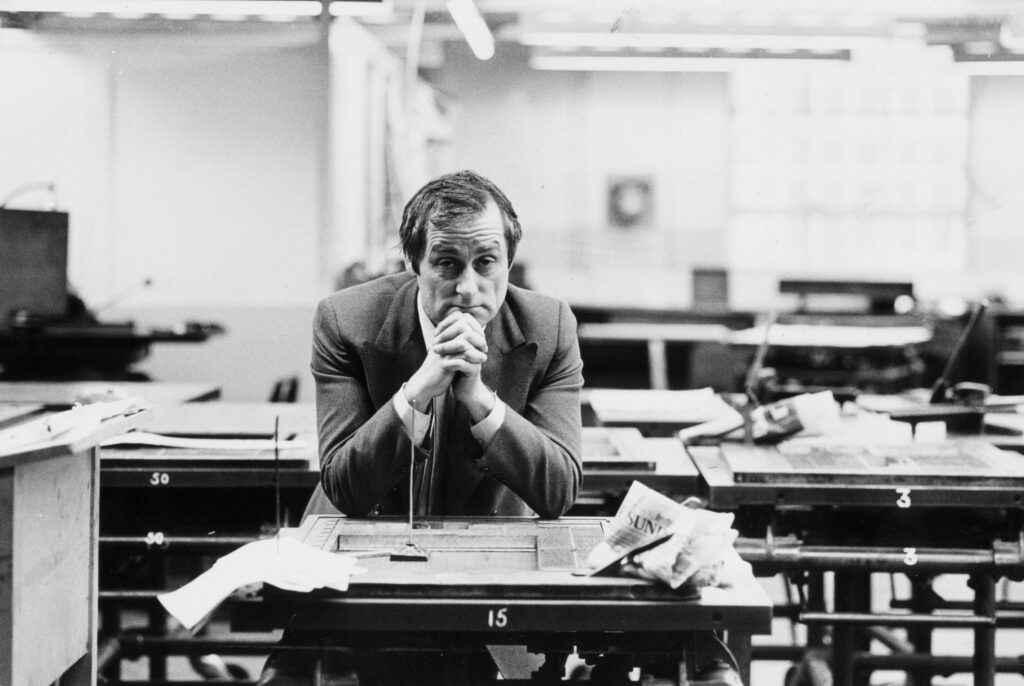
The Sunday Times photo of the editor Harold Evans. June 1986
Credit : The Times / News Licensing
Myrie spoke of how he shared a love of America with Harry Evans at the same time as ever seeking to understand and report on “the gaps between its ideals and its reality”, between rich and poor. According to the latest Freedom in the World report, the US was outside the top 50 countries for tackling political corruption, while a fifth of Americans were illiterate or semi-literate.
“And to see the country brought so low by beyond cynical politics on Jan 6 was truly heart breaking,” confessed Myrie, who this year scooped both the Royal Television Society’s ‘TV Journalist of the Year’ and ‘Network Presenter of the Year’. Myrie showed fiercely partisan clips of American “opinion hosts”, such as Tucker Carlson of Fox News and Anderson Cooper of CNN, with “captive audiences of 1m each” with no legal obligation to be impartial. “They depend on throwing their audiences more and more red meat. That way they make money for the networks,” he said.
But despite new broadcasters like GB News on the UK horizon committed to breaking what some have called “the one-party state” of British broadcasting, he believed that Ofcom rules would remain “a bulwark against what is happening in America”.
Asked by Helen Boaden, the BBC’s ex-Director of News, chairing the lecture, about a potential danger of a “loosening” of Ofcom rules under the mooted chairmanship of former Daily Mail editor and now chairman and editor-in-chief, Associated Newspapers, Paul Dacre, Myrie said: “The power of Ofcom doesn’t reside in a single man. There could be some loosening of tone perhaps but Ofcom rules stretch from here to France in terms of paper work. I doubt whether one man can change that.”
Of the threat of “the nanny state”, suffocating broadcasting here, Myrie observed: “We put on seatbelts, we all live under lockdown. The government has a wider responsibility to look at the interests of society by maintaining broadcasting balance. We saw a high level of acrimony during the Brexit campaigns. Ofcom has a long, long way to run in protecting this country.
“What would Harry Evans have thought about this? I think he would have said: If you haven’t got trust, what’s the point?”
On the recent row over Piers Morgan’s diatribe on Good Morning Britain about the Megan and Harry Oprah interview, Myrie said: “It’s not for me to judge but the Duchess of Sussex put in a complaint to Ofcom along with 41,000 viewers as well. He’s been flexing the guardrails for a long time and this time he tried to smash them but he stumbled – and the guardrails held firm. Perhaps the threat of Ofcom forced his employers – or even his own hand?”
The lecture, entitled ‘Over here, over there. Lessons from the USA on News Impartiality’, was introduced by Sir Harry’s widow, journalist Tina Brown, via video link.
She said: “Harry would have been thrilled to know this was being held in his name and so delighted to know it was Clive Myrie giving the lecture.
“Harry was always visceral when talking about British newspapers and although he worked in the steam age of the newspapers, he was tweeting to the last and was unwavering in the interests of truth. He had a deep human curiosity, tenacity and a moral seriousness that was the opposite of pious.”
You can watch the lecture here:

